top of page


The Swim That Nearly Didn't Happen
Five minutes before the start, I still wasn't entirely sure we were going. For most of the week, the forecast wind had been steadily moving in the wrong direction. What had started as a relatively benign southerly breeze had gradually strengthened day by day. By the afternoon of the swim, the wind had increased significantly from the south, exposing much of the route to larger waves than we had originally expected. To add another layer of uncertainty, our safety boat had deve

Pete Wilby
4 min read


How Swimmers Can Avoid Polluted Water: A Coach's Guide
One of the less glamorous parts of running open water swimming sessions is paperwork. Over the years, I have built up a fairly substantial document covering all of the operational procedures for PeteWilbyTriathlon. In the industry, this is known as a Normal Operating Procedure (NOP). Given the risks and responsibilities associated with coaching swimmers in the open water, I find it incredibly valuable to have an experienced external reviewer review my plans each year. I do th
Pete Wilby
4 min read


What I Learned About Coaching Athletes with Type 1 Diabetes
As an endurance coach, I'm always looking for ways to better support the athletes I work with. Recently, I completed a course on coaching participants with Type 1 Diabetes (T1D), and one of the biggest takeaways was the importance of communication. Before the course, I understood that athletes with Type 1 Diabetes could participate in sport at every level. I have worked with athletes who have T1D, identified through medical declarations, and have seen them test their glucose
Pete Wilby
5 min read


Human vs AI Coach (Stoked vs Robot)
Worlds away from... loan repayments, tabloid headlines, mortgage statements... Stoked up coals inside of me that I've not felt since nighty three... Luke Wright - poet (just three snippits from the brilliant Essex Lion) When AI coaching tools first appeared in mainstream endurance sport, I felt a mix of curiosity and caution. Not because they weren’t useful, but because they raised a simple question about where they sit within coaching practice and what that means for the co
Pete Wilby
4 min read


GRIT
Grit is perseverance and consistency towards long-term goals. To me, grit is what keeps people moving when it would be easier to stop. It is not about motivation or feeling in control. It is about turning up when the session looks unlikely to go well, when the body feels off, or when the head is not quite there. Grit is staying in it anyway. For me, Alistair Brownlee captures that mindset well. In Relentless, he wrote: “The best athletes don’t rely on feeling good; they show
Pete Wilby
3 min read


Get to Run, not Got to Run
To cut to the chase, a mix of walking and running has been used for years to complete long distances. It's simple logic, walking is easier, so walking bits makes the overall task easier. Early marathon winners mixed in walking. Thomas Hicks , the winner of the 1904 Olympic Marathon, famously walked to survive. The 1904 marathon in St. Louis was held in 32°C heat on dusty, unpaved roads. Hicks’ victory is notorious not only because he walked parts but because he was kep
Pete Wilby
3 min read


Combe Cellers to Shaldon Beach
Discover the Magic: Combe Cellars to Shaldon Beach Adventure Swim The adventure swim from Combe Cellars to Shaldon Beach offers the perfect blend of exploration, challenge, and natural beauty. This isn’t your typical swim. Covering 3km in total, with the tide, is around 1500m of open water swimming to your stroke. The swim starts at the Combe Cellers pub jetty in Combeinteignhead and along the stunning stretch of the Teign river past some secret beaches, attractive boat hous
Pete Wilby
1 min read


Turning Up the Heat: Using Heat Training to Boost Fitness (Even If You’re Not Racing in the Heat)
When most athletes hear the phrase heat training , they think acclimation - surviving a hot race or preparing for a foreign climate. But what if heat wasn’t only a tool for coping? What if it were a tool for improving? Recently, after being prompted by a coached athlete earlier in 2025, I’ve been investigating bike-based heat-training protocols not just for acclimation but also as a deliberate way to elevate fitness during everyday training. And the more I see, the more convi
Pete Wilby
6 min read
Open Water is COLD!
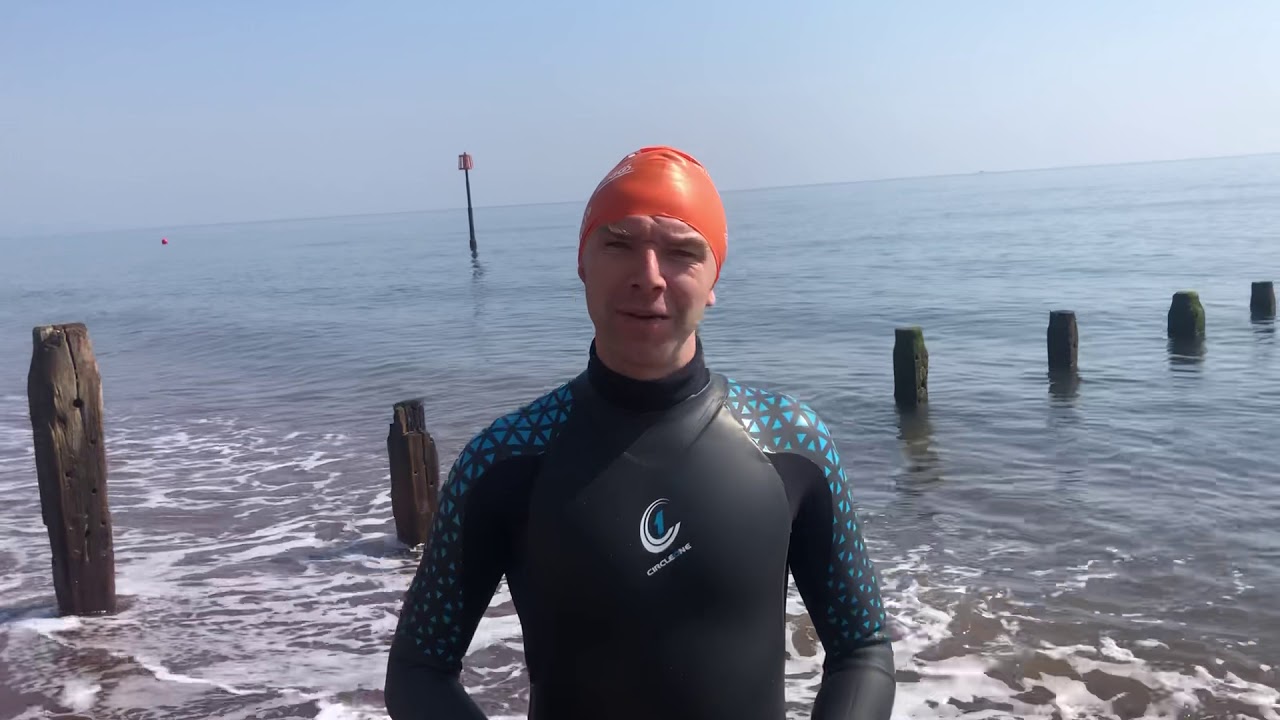
Cold-water triathlon training begins with understanding the cold-shock response—not just as a risk but as a physiological benefit. The initial gasp, rapid breathing, and heart-rate spike can boost alertness, circulation, and stress resilience when managed safely. Respect those first 60–90 seconds: enter gradually, keep your airway clear, and slow your breathing before you start swimming. Use a short “acclimatisation phase” at the start of every swim. Float or tread water, an
Pete Wilby
3 min read


Sweat Test
Estimating Your Sweat Rate: A Practical Guide for Endurance Athletes Understanding your sweat rate is a valuable step toward refining your hydration strategy, both in training and on race day. Knowing how much you typically lose through sweating helps you determine what—and how much—you need to drink to replace fluids and electrolytes. Sweat rate is highly individual. Some athletes naturally sweat more, while others sweat less, and it can vary significantly depending on condi
Pete Wilby
3 min read


Strength
Strength underpins everything we do — not only in sport, but in life. As endurance athletes, we sometimes focus so heavily on miles, pace and heart rate that we forget the foundation that makes all of that possible. Strength supports us day-to-day, enabling us to move well, stay healthy, and enjoy our training over the long term. I like to think about strength in two parts: strength of body and strength of mind . Each plays its own role, and both are essential. The strengt
Pete Wilby
2 min read


Endurance Training – The Doorway to Success
Endurance isn’t just about going longer — it’s about building a body that lasts, a life that supports progress, and a mindset that refuses to quit. Whether you're chasing your first 5K, a marathon PB, or the finish line of an Ironman, actual endurance training builds confidence, capability, and long-term health from the ground up. But endurance doesn’t happen by accident. It requires structure, awareness, and discipline. Life needs to be organised so training can be consisten
Pete Wilby
3 min read


Strong Body
Endurance challenges might include triathlons, long-distance swimming, running, cycling, rowing, or any of these activities performed overnight, or unicycling, skating, or kayaking... the list is endless. Athletes taking on this challenge will repeatedly strain their bodies with a single set of movements. They will benefit from having stronger skeletal muscles to help endure and apply force to the activity. While endurance training builds stamina and cardiovascular power, s
Pete Wilby
4 min read


Strength of Mind for Endurance Athletes
In endurance sports, success is often attributed to physical conditioning — VO₂ max, lactate threshold, or muscular efficiency. Beneath every endurance athlete’s body lies something even more vital — a strong mind. Strength of mind isn’t about ignoring pain or pretending fatigue doesn’t exist. It’s about managing the inner dialogue that decides whether you stop or keep moving. For endurance athletes, mental strength is the bridge between training and achievement. It’s what k
Pete Wilby
2 min read


Nutrition (for endurance training and racing)
In endurance training and racing, additional healthy nutrition is needed. Referring to ‘diet’ as the day-to-day consumption of three nutritious meals, drinks, and snacks. The extra ‘sports-nutrition’ would be consumed close to the training session and during, to keep you going, and immediately after to aid recovery. The additional fuel required during these challenges is mainly carbohydrate. We burn this off fast. While some endurance is primarily fat-burning, the body
Pete Wilby
3 min read


LIFE
A high level of organisation is crucial for anyone undertaking endurance training. Be it for pure health or to be a competitive athlete. Simultaneously, endurance training also provides more structure, discipline, and consistency to your life, but one doesn’t work without the other. Let's face it, the ‘life’ stuff contains more essential, non-negotiable facets — like work and family — than endurance training ever would. Generally speaking, training is the fun bit. On
Pete Wilby
3 min read


Strategy Planning
The difference between the impossible and the possible lies in determination - Usain Bolt Many people reading this have a triathlon-related goal for this year. As part of structuring training into life, this blog is to encourage you to do two main things: Think further ahead, DREAM Be grounded and realistic when you aim for things This blog is actually a strategy planning exercise. Primarily, in this context, I would like you to use it for planning your endurance goals. Bu
Pete Wilby
3 min read


Hydration for Endurance Athletes: A Practical Guide
When we exercise, we sweat — even when sea swimming. Sweating is essentially a form of dehydration, as your body loses both water and electrolytes. The amount you sweat is highly individual. Heavier athletes, those moving at higher intensities, and those exercising in hot conditions generally sweat more. In contrast, lighter athletes, those exercising at lower intensities, or those training in cooler conditions, tend to sweat less. Of course, many athletes sit somewhere in th
Pete Wilby
4 min read


Recognising The Nutrients
Eat more wholesome, less processed food types. Also, try to maintain a balance in the kinds of food to increase your nutrient intake. The nutrients we consume can be categorised into six groups. Each nutrient contains a set amount of Kcal per gram: Carbohydrate (4 Kcal per gram) Fat (9 Kcal per gram) Protein (4 Kcal per gram) Vitamins (no Kcal) Minerals (no Kcal) Alcohol (7 Kcal per gram) Recognising, more or less, what kind of macronutrient a food type is mainly, will h
Pete Wilby
4 min read


What should I eat
What should I eat? Choosing food and drink which is close to the source (e.g. hasn’t travelled or changed much from the original form)...
Pete Wilby
2 min read
bottom of page